
Mastering Telephoto Photography in Wilpattu's Dense Canopy
Navigate Wilpattu's challenging light and dense foliage with expert telephoto techniques for elusive leopards and bears.
Governor's Camp Wilpattu
Master Naturalist Team
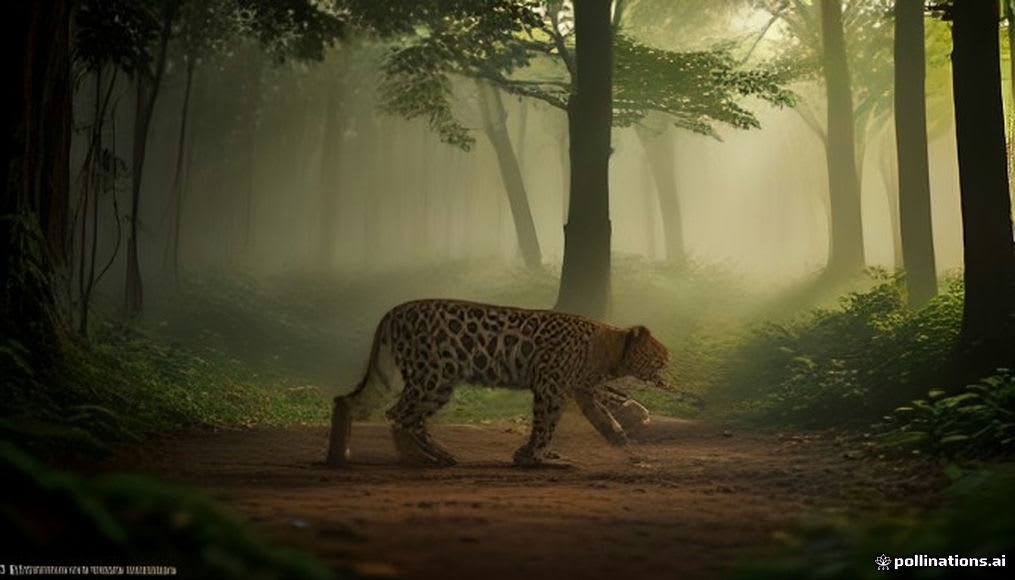
The pre-dawn chill in Wilpattu National Park carries the metallic clinking call of a White-rumped Shama (Copsychus malabaricus) as the first hint of light filters through the ancient dry-zone monsoon evergreen forest. This is Sri Lanka's largest national park, a sprawling 1,317 sq km wilderness punctuated by over 106 natural sand-rimmed rainwater lakes, known locally as villus. Photographing its elusive inhabitants – particularly the Ceylon Leopard (Panthera pardus kotiya) and Sri Lankan Sloth Bear (Melursus ursinus inornatus) – demands more than just a powerful lens; it requires an intimate understanding of light, habitat, and advanced field craft. The dense scrub, dominated by Palu (Manilkara hexandra) and Ceylon Satinwood (Chloroxylon swietenia), presents unique challenges for telephoto wildlife photography. Subjects often appear suddenly, partially obscured, and in varied light conditions, from deep shadow to dappled sunlight. Capturing these moments with precision requires not only technical proficiency but also the patience inherent to a true naturalist's expedition.
Mastering Light and Foliage in Wilpattu's Interior
Wilpattu's villus, such as Kokkariya Wila and Maradanmaduwa Wila, offer open water sources where animals congregate, but the most compelling encounters often occur within the forest's deeper reaches. Here, the light is perpetually challenging. During the prime viewing hours of first light (06:15–08:30) and late afternoon (15:45–18:15), the sun's angle can create harsh contrasts or leave subjects in deep shadow. A fast telephoto lens (f/2.8 or f/4) is paramount, ideally with a focal length of 400mm or greater on a full-frame sensor, or 300mm+ on an APS-C body to achieve adequate reach through the foliage.
To compensate for the low light and the need for fast shutter speeds to freeze motion, photographers must be prepared to push their ISO settings. Modern camera bodies handle ISO 800–1600 with admirable clarity; do not hesitate to use these sensitivities. Prioritise shutter speed (1/500s or faster) over a low ISO to ensure sharp images of moving subjects. Utilise spot metering or centre-weighted metering to expose accurately for the animal, rather than the brighter sky or darker foliage surrounding it. Continuous autofocus with a single point or small zone is often most effective for locking onto an animal partially obscured by branches.
Optimal settings for dense canopy: ISO 800-1600, aperture f/2.8-f/4, shutter speed 1/500s+ to freeze motion in challenging light.
Precision Tracking and Stabilisation for Elusive Cats
The Ceylon Leopard is a master of camouflage. Our trackers rely on subtle cues: the alarm barks of Chital (Axis axis), the guttural cough of a Barking Deer (Muntiacus muntjak), or the agitated calls of Grey Langurs (Semnopithecus priam). When these signals emerge, vehicle positioning becomes critical. Anticipate the animal's likely path and position the safari jeep to offer a clear, albeit brief, line of sight. This is where the lens beanbag becomes an indispensable tool. Resting a heavy telephoto lens directly on the vehicle's frame or a window provides superior stability compared to handheld shooting, drastically reducing camera shake at slower shutter speeds or extreme focal lengths.
For Sloth Bear encounters, particularly during the Palu berry ripening season (May to July), patience is key. These nocturnal animals are often seen foraging in the early mornings or late evenings. The beanbag allows for sustained, stable observation, crucial for capturing their distinct features as they move through the undergrowth. Always be ready to adjust focus and composition rapidly; these are wild animals in their natural habitat, and photographic opportunities are often fleeting. Pre-setting your camera to a high burst rate can increase your chances of securing a sharp frame.
Governor's Camp Wilpattu: Tailored Photographic Expeditions
Our expeditions from Governor's Camp Wilpattu offer a distinct advantage. Located with immediate VIP access via the tranquil western Eluwankulama gate, we bypass the main park entrance crowds, ensuring we are among the first vehicles into the park at dawn. This early access is crucial for capitalising on the prime photographic light and catching animals before they retreat into the densest cover. Our expert naturalists, with hundreds of hours in Wilpattu, understand the intricate movements of its wildlife and the optimal vantage points.
The experience extends beyond the vehicle. Our riverfront tented camp bordering Raalmadu Oya provides a secluded base, where the sounds of the bush continue into the evening. Nocturnal guided river walks offer opportunities for macro photography of insects or observations of the Grey Slender Loris (Loris lydekkerianus nordicus), further enriching the photographic portfolio. Every detail, from vehicle type to tracker assignment, is curated to maximise your chances of capturing world-class images, all whilst adhering to the highest ethical standards of wildlife observation.
Always carry a substantial beanbag for lenses 400mm and above; critical for sharp images from a safari vehicle in Wilpattu's terrain.
Field Notes & Key Takeaways
- Target first light (06:15–08:30) and late afternoon (15:45–18:15) for optimal light and animal activity in Wilpattu.
- Listen for alarm barks of Chital or Barking Deer; these are crucial indicators of a nearby Ceylon Leopard.
- Utilise a 400mm+ telephoto lens, a sturdy beanbag, and be prepared to shoot at ISO 800-1600 with fast shutter speeds.
- Governor's Camp Wilpattu offers exclusive early access via the Eluwankulama gate, maximising prime photographic opportunities.
Frequently Asked Questions
What is the best time of year for leopard photography in Wilpattu?
While Ceylon Leopards are present year-round, the dry season (May to October) often offers better visibility as water sources diminish, concentrating animals around the villus. However, the Palu berry season (May to July) is particularly excellent for Sloth Bear sightings, often presenting unique photographic opportunities.
What essential gear should I bring for telephoto wildlife photography in Wilpattu?
A fast telephoto lens (400mm f/2.8 or f/4 is ideal), a sturdy beanbag for vehicle stability, and a camera body capable of good high-ISO performance are crucial. Consider a second body with a shorter zoom (e.g., 70-200mm) for wider habitat shots or closer encounters. Spare batteries, ample memory cards, and cleaning cloths are also essential.
How does Governor's Camp Wilpattu enhance the photographic safari experience?
Governor's Camp Wilpattu provides exclusive early access to the park via the Eluwankulama gate, ensuring you are among the first to enter. Our experienced Master Naturalist Team offers unparalleled tracking expertise and positioning advice. The camp's secluded riverfront location allows for continuous immersion in the wilderness, complementing your daily photographic expeditions.
Tailored Wilderness Sanctuary
Experience Governor's Camp Wilpattu
Immerse yourself in authentic luxury, private game drives with master naturalists, and handcrafted hospitality.
Continue Reading
View All Journal Stories
The Leopard Diaries: A Guide to Spotting Big Cats in Wilpattu
Wilpattu National Park is one of the premier sanctuaries on earth to encounter the elusive Sri Lankan leopard. Here are our master naturalists' field-tested insights on tracking, prime daylight windows, and serene post-safari poolside relaxation.
6 min read
A Culinary Journey: The Spices and Flavours of Sri Lanka
Sri Lankan cuisine is a vibrant, aromatic tapestry woven from cinnamon, roasted spices, creamy coconut milk, and sea-fresh bounty. Discover how Governor's Collection curates an authentic epicurean journey in the wild.
4 min read